
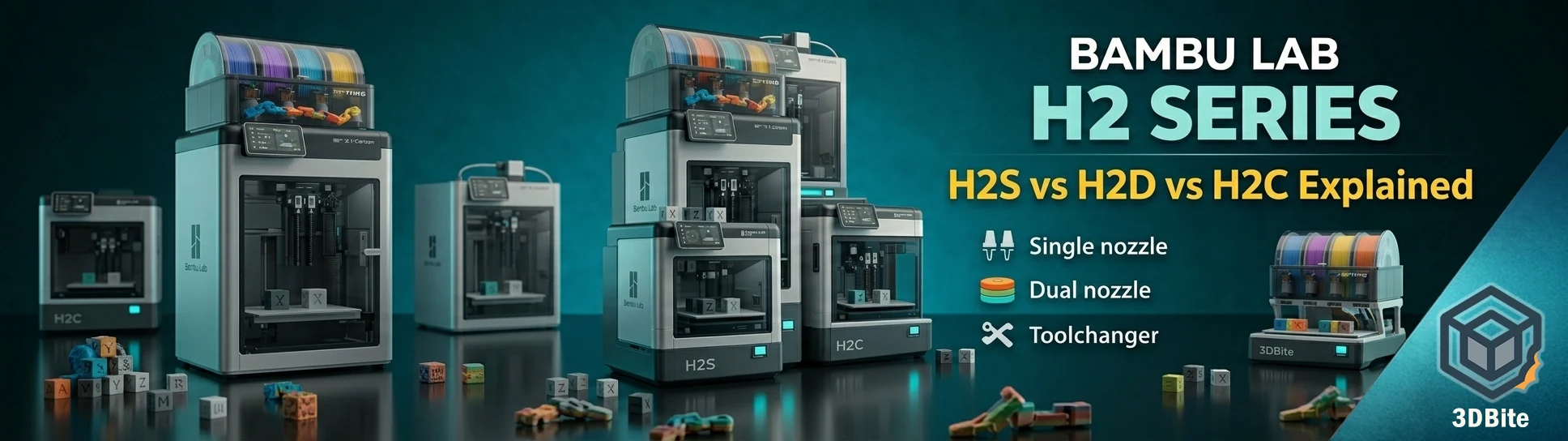
A short time ago, Bambu Lab took a major step forward with the release of the H2 Series. Rather than simply iterating on the X1 and P1 platforms, these new machines represent a shift toward multi-function, multi-material manufacturing systems.
This guide breaks down the three new models — H2S, H2D and H2C — and explains what actually matters in real-world use, not just spec sheets.
What Has Changed from the Previous Generation?
The X1, P1 and A1 series were built primarily as high-performance 3D printers. The H2 series shifts that thinking toward platform-based machines capable of handling multiple fabrication tasks.
- Larger, workshop-scale build volumes
- Heated chambers designed for engineering materials
- New approaches to multi-material printing
- Support for laser, cutting and additional toolheads
- Higher sensor density and automation
The Three Models Explained
H2S — The Simplest Entry Point
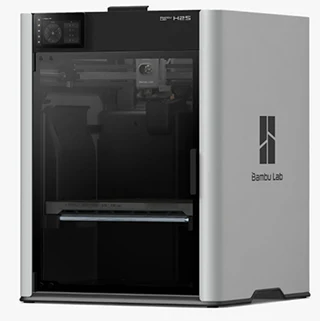
The H2S is the most accessible model in the lineup. It uses a single nozzle and relies on AMS-style material switching, making it familiar to existing Bambu users.
- Single nozzle system
- AMS-based multi-material
- Large format build volume
- Lower complexity
- Best suited to advanced hobbyists
H2D — Dual Nozzle Evolution
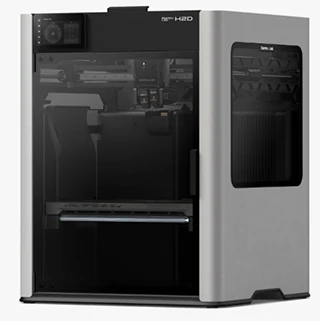
The H2D introduces a dual nozzle system, reducing the reliance on purge towers and significantly improving multi-material efficiency.
- Dual nozzle system
- Reduced purge waste
- Supports additional tool modules
- Strong balance of performance and usability
- Ideal for prosumers and creators
H2C — The Next Generation Platform
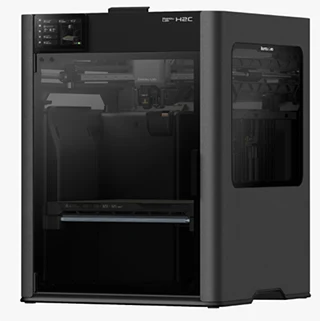
The H2C represents the biggest leap forward. Instead of swapping filament, it swaps entire toolheads, dramatically reducing waste and unlocking true multi-material workflows.
- Toolchanger-style system
- Multiple hotends (up to 6–7)
- Minimal purge waste
- Highest complexity
- Designed for power users and production environments
H2 Series Comparison Table
| Feature | H2S | H2D | H2C |
|---|---|---|---|
| Nozzle System | Single nozzle | Dual nozzle | Toolchanger |
| Multi-material | AMS (purge required) | Dual nozzle (reduced purge) | Hotend swapping |
| Material Waste | High | Medium | Low |
| Build Volume | Large | Large | Large |
| Chamber | Heated | Heated | Heated |
| Tool Modules | Limited | Supported | Fully supported |
| Complexity | Low | Medium | High |
| Best For | Hobbyists | Creators | Production users |
How It Compares to X1, P1 and A1
The H2 series is not just a replacement for the X1 or P1. It is a different class of machine.
- Size: significantly larger and more workshop-focused
- Materials: better handling of ABS, ASA and engineering plastics
- Multi-material: evolution from purge systems to dual nozzle and toolchanger
- Expandability: support for laser and cutting tools
- Automation: increased sensor integration
Which One Should You Choose?
If you strip away the marketing, the decision is fairly simple:
- H2S: Best if you want a bigger, more capable version of an X1-style printer
- H2D: Best balance of capability and usability
- H2C: Best if you want cutting-edge multi-material with minimal waste
Final Thoughts
The H2 series shows where Bambu Lab is heading. This is less about faster printing and more about building flexible, multi-process machines.
For most users, the H2D is likely to be the sweet spot. The H2C is the most interesting technically, but also the most complex. The H2S remains the easiest transition from existing Bambu printers.
Thank you for the comparison